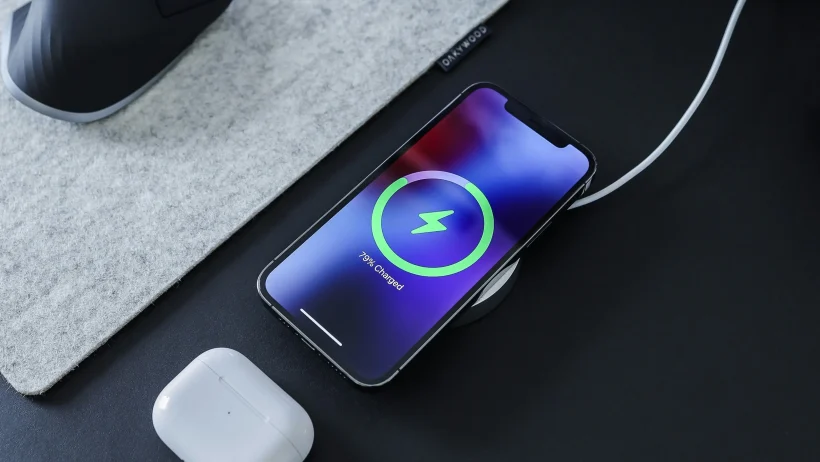
My Setup: How I Use MagSafe to Simplify Charging at Home and Work
By shifting from constant motion to purposeful tech use and simple systems, the author finds clarity and reclaims productivity without sacrificing well-being.
The article shares how intentional slowdown and thoughtful use of technology, like separating devices for work and leisure, help regain focus and mental clarity. Creating simple, adaptable systems can boost productivity without burnout.
AI-generated
Key Moments
1
Mindset Shift for Focus
Moving from elimination to curation of tools improves sustainable focus.
2
Simple Systems Increase Productivity
Building adaptable, lightweight habits aligned with actual tasks boosts clarity and momentum.
3
Gear Supports Mental Flow
Intentional choices like a standing desk and smart lighting change how one approaches work.
4
Taking Breaks Enhances Creativity
Integrating rest and physical activity into the workflow leads to clearer thinking and better ideas.
AI-generated
HomeTrendsMy Setup: How I Use MagSafe to Simplify Charging at Home and Work
I used to believe that productivity was entirely tied to time management — that if I could just squeeze more into each hour, I’d get further, faster. But the longer I pushed myself into this mode of constant motion, the more I felt scattered, uninspired, and eventually, burned out. That’s when I started experimenting with intentional slowdown — not just in my schedule, but in how I interacted with the tools, spaces, and routines in my everyday life.
Finding focus, I’ve learned, isn’t about forcing quiet — it’s about creating the conditions where clarity naturally returns. From notifications pulling me in every direction to multitasking until everything blurred together, I was constantly reacting and rarely creating. When I began setting boundaries — no notifications before 9 AM, a hard stop to screen time by 9 PM — I regained a sense of control I didn’t realize I’d lost.
Discipline doesn’t mean restriction — it means giving your attention somewhere fully.
AI-generated
I also realized that gear matters — not just in performance, but in how it supports mental flow. My standing desk and smart light setup aren’t fancy add-ons — they’re intentional design choices that signal purpose. It may sound like a small detail, but these tools changed the way I feel about showing up to work every day.
Ultimately, it’s about creating systems that support who I want to be, not just what I want to do. The difference between a day that feels productive and one that feels scattered isn’t just about the task list — it’s how prepared and clear-headed I am when I begin.
Discover the Tech That Helped Me Reset
At some point, I started to audit my digital and physical setups — not because I wanted to buy more gear, but because I wanted the tech I already used to actually work for me. From a distraction-free writing app to a minimalist calendar layout that only shows the next three tasks, every tool was chosen with clarity in mind. I swapped out bloated software for simpler alternatives, turned off auto-sync features I didn’t need, and let go of redundant workflows. These changes didn’t just speed things up — they gave me more mental breathing room. If you’re curious, you can check out a list of my daily go-to tools at The Sweet Setup.
A big misconception people have when trying to reclaim their focus is that they need to do a full digital detox or give up all their favorite platforms. That’s rarely sustainable and, honestly, not necessary. What helped me instead was asking: “Is this tool or app contributing to the life I want to build, or just filling time?” That question alone led me to adjust how I use social media, switch to tools that respect my attention, and stop using productivity hacks that added more noise than value. The mindset shift wasn’t about elimination — it was about curation.
A system doesn’t have to be complex to be powerful — in fact, the simpler it is, the more likely you are to stick with it. I wanted something lightweight and adaptable, not rigid. So I built a core set of habits and tools around what I actually do in a week, not what an ideal day looks like. From quick daily reviews to a digital “inbox” I process weekly, these systems create a sense of momentum and mental clarity without micromanagement.
How I Made It Easier:
One Device, One Purpose: I separated work and leisure by keeping my phone for communication and my tablet for reading or focused tasks. This cut down on context switching and made it easier to enter flow states.
Scheduled Distractions: I gave myself specific windows for browsing and entertainment, which helped prevent random doom-scrolling from stealing my energy in the middle of the day.
“Discipline doesn’t mean restriction — it means giving your attention somewhere fully.”
In a world that pushes for more, faster, constantly — I’ve found that fewer, slower, and more intentional feels better. I no longer try to win the day by doing everything at once. Instead, I focus on doing a few things well, and making sure those things align with how I want to feel and what I want to create.
This doesn’t mean I’m anti-tech. On the contrary — I love technology. But I’ve become much more deliberate about how and when I use it. I’ve learned that my best ideas come when I’m not glued to a screen, and that technology works best when it supports my goals, not replaces them.
Taking breaks isn’t just about rest — it’s part of the workflow now. Stepping outside, riding my bike, or even cleaning up my workspace has become essential to thinking clearly and solving problems. It’s in those in-between moments that I find the most clarity, and often, my most creative ideas.
If there’s one thing I’ve learned through all of this, it’s that clarity doesn’t come from perfect tools or rigid schedules. It comes from paying attention to how I work, what drains me, and what actually helps me feel engaged. From there, I build outward — intentionally, calmly, and with just the right amount of tech.



















This was a great read — simple, honest, and well-written. Always nice to come across blogs like this.
Really enjoyed reading this! It felt personal but also super easy to relate to. Looking forward to more posts like this.
Thanks a lot! Glad it connected with you — I’ve got a few more posts lined up, so stay tuned!
I like how real and thoughtful this post was. It made me reflect a bit too. Keep it up!